Ondatra zibethicus
The Common Muskrat
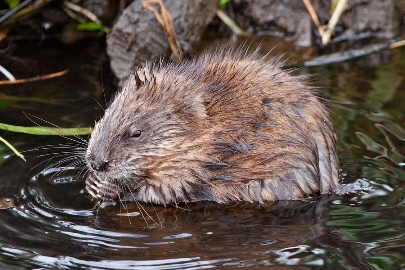
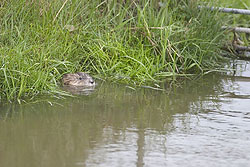
The common muskrat is a large rodent that resides in aquatic
environments such as marshes. They are usually about two feet in
length including their tail. Their bodies are covered in thick
 brown
fur that is made up of both an outer layer which keeps them dry,
and a heavy inside layer which helps them retain their body heat
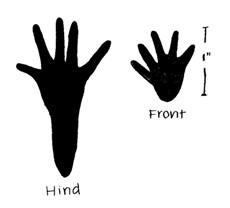
while swimming in the cold water that they inhabit. Their front
feet are small and they have four fingers with claws and a small
thumb which they use for grasping. The back feet are larger and
have five webbed fingers with claws. Along with their webbed
back feet and strong, flattened tail, the common muskrat is a
very efficient swimmer. Their eyes and ears are very small and
most times the ears are almost hidden in their thick fur. Their
large incisor teeth are located in front of their cheek,
allowing them to gnaw and chew submergent and aquatic vegetation
while swimming underwater.
brown
fur that is made up of both an outer layer which keeps them dry,
and a heavy inside layer which helps them retain their body heat
while swimming in the cold water that they inhabit. Their front
feet are small and they have four fingers with claws and a small
thumb which they use for grasping. The back feet are larger and
have five webbed fingers with claws. Along with their webbed
back feet and strong, flattened tail, the common muskrat is a
very efficient swimmer. Their eyes and ears are very small and
most times the ears are almost hidden in their thick fur. Their
large incisor teeth are located in front of their cheek,
allowing them to gnaw and chew submergent and aquatic vegetation
while swimming underwater.
Muskrats serve many important purposes for their
habitat and other organisms that they
interact with. They are the most
valuable aquatic mammals in the fur trading industry, and are
 worth
millions each year. They also are very important in their habitat
because they provide a prey source for several species including
mink and large predatory birds. Muskrats also regulate the types and
the amount vegetation in their habitat. As they harvest submergent
and aquatic vegetation for food and to build their lodges, they
provide open spaces for new plants to grow and space for other
animals to build their nests, such as ducks and geese. To learn more
about how the common muskrat is classified in the grand scheme of
things click here.
worth
millions each year. They also are very important in their habitat
because they provide a prey source for several species including
mink and large predatory birds. Muskrats also regulate the types and
the amount vegetation in their habitat. As they harvest submergent
and aquatic vegetation for food and to build their lodges, they
provide open spaces for new plants to grow and space for other
animals to build their nests, such as ducks and geese. To learn more
about how the common muskrat is classified in the grand scheme of
things click here.