Ixodes scapularis - Deer Tick
Symbiotic Species
(Click species name to view hyperlink!)
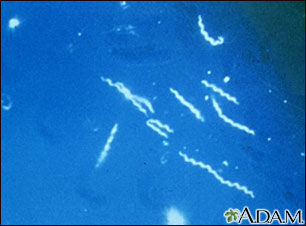
This bacterial species can reside in the stomach of Deer ticks. It is transmitted through the blood and is the cause of Lyme's disease. The two species have a mutualistic relationship.

This organism is the White-Tailed Deer. It serves as a host for the Adult Deer Tick. The tick has a parasitic relationship to the deer.

This species also can serve as a host for adult and also nymph Deer ticks. The Deer tick would also have a parasitic relationship to the wolf.
Deer Ticks all too often use humans as a source for food as well. They are able to transmit Lyme's Disease from one host to another at any time when infected. To learn more about Lyme's Disease please click on the URL's to visit the following sites:
Centers for Disease Control and Prevention
http://www.cdc.gov/ncidod/dvbid/Lyme/
Medline Plus Medical Encyclopedia
http://www.nlm.nih.gov/medlineplus/ency/article/001319.htm
Hardin MD: Lyme's Disease (University of Iowa)
http://www.lib.uiowa.edu/hardin/md/lymedisease.html
American Lyme's Disease Foundation