Trichinella spiralis
Trichinella spiralis
Trichinella spiralis is a multicellular organism that belongs to the phylum, Nematoda. In Latin, Trichinella spiralis means spira, which is a reference to how this organism coils up in its host. This organism is most well known for its parasitic life style. Some other well know parasitic nematodes are Ancylostoma duodenate (hookworm), Wuchereria bancrofti (flarid nematode), Tricharis Vulpis (Intestinal parasite of dogs), and Dirofilaria immitis (Heartworm). The main hosts for this organism are meat eating animals, such as bears, rodents, swine, and humans. T. spiralis resides within the skeletal muscle of these creatures. The host organism that we worry the most about are pigs, since most everyone has had pork sometime in their life. When eating a pork product one must make sure that it is fully cooked otherwise these parasitic nematodes will cause infection, leading to a disease called trichinosis. Want to learn more about parasitic organisms click here
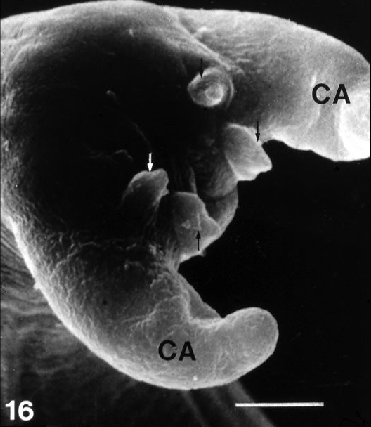 A few of the defining
structures of these nematodes that have allowed them to
adapt to their enviroment
are the presence of buccal cavity, tail, cuticle, simple
nervous system and amphids. Adult worms are cylindrical
and vary in length from about 1 to 2 millimeters; although,
some organisms can get up to several millimeters in length
in rare cases. The basic body structure is a tube within a
tube. The external tube is made up of the epidermal layer
and the cuticle. The inner tube represents the gut region.
The gut has three parts: the oesophagus, intestine, and rectum. These structures all lie
within a fluid filled cavity called a pseudocoelom. These organism are diocious, which
means that there are both female and male worms.
A few of the defining
structures of these nematodes that have allowed them to
adapt to their enviroment
are the presence of buccal cavity, tail, cuticle, simple
nervous system and amphids. Adult worms are cylindrical
and vary in length from about 1 to 2 millimeters; although,
some organisms can get up to several millimeters in length
in rare cases. The basic body structure is a tube within a
tube. The external tube is made up of the epidermal layer
and the cuticle. The inner tube represents the gut region.
The gut has three parts: the oesophagus, intestine, and rectum. These structures all lie
within a fluid filled cavity called a pseudocoelom. These organism are diocious, which
means that there are both female and male worms.
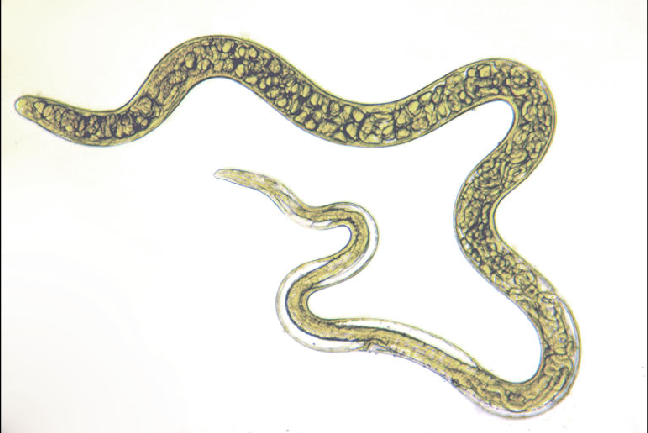
To learn more about how this organism adapts click here