
Communication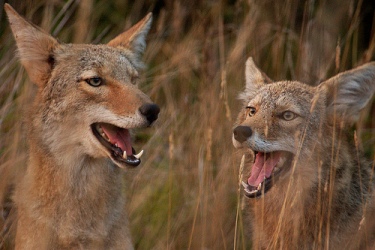
Coyotes are the most vocal of the wild canines, with a
complex combination of barks, yips and howls that they use to
communicate on a daily basis. Eleven different forms of
vocalization have been identified, but much more study of this
is required to determine the precise meanings of these sounds.
 Mother coyotes
have been known to signal
to their pups with calls that indicate danger, dinner or other
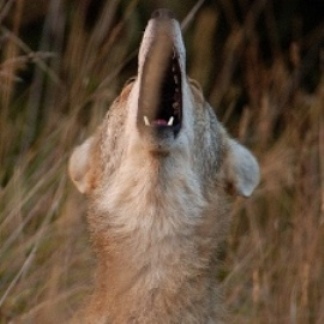
more complex feelings. Their very distinct yip-howl is used
primarily to keep pack members in communication when they are
separated, but it has also been heard simply as a means of
expressing some deeper feelings of the animal. Many
authors and coyote enthusiasts describe the howl of the coyote
and one of the truest wild sounds to be heard. Barking is used
more often as a warning to other coyotes that are approaching
territory borders. Coyotes have also been observed to
communicate through their gait, their posture, and the position
of their tail. These can all be indicators of mood and
overall health of the animal.
Mother coyotes
have been known to signal
to their pups with calls that indicate danger, dinner or other
more complex feelings. Their very distinct yip-howl is used
primarily to keep pack members in communication when they are
separated, but it has also been heard simply as a means of
expressing some deeper feelings of the animal. Many
authors and coyote enthusiasts describe the howl of the coyote
and one of the truest wild sounds to be heard. Barking is used
more often as a warning to other coyotes that are approaching
territory borders. Coyotes have also been observed to
communicate through their gait, their posture, and the position
of their tail. These can all be indicators of mood and
overall health of the animal.
Mother coyotes
have been known to signal
to their pups with calls that indicate danger, dinner or other
more complex feelings. Their very distinct yip-howl is used
primarily to keep pack members in communication when they are
separated, but it has also been heard simply as a means of
expressing some deeper feelings of the animal. Many
authors and coyote enthusiasts describe the howl of the coyote
and one of the truest wild sounds to be heard. Barking is used
more often as a warning to other coyotes that are approaching
territory borders. Coyotes have also been observed to
communicate through their gait, their posture, and the position
of their tail. These can all be indicators of mood and
overall health of the animal.