All about the rainbow lorikeet:
Interactions- Who are their friends and foes?
Rainbow
lorikeets are listed as omnivores on the food web.
As mentioned in the
Nutrition section, rainbows mostly
eat pollen and nectar, but occasionally they will feed on an insect,
plant, flower, or seed.
They are preyed upon by larger birds, especially goshawks
and peregrine falcons.
Rainbow lorikeets are sometimes seen flying with
red-collared lorikeets and scaly-breasted lorikeets.
Every once in awhile, these 2 species will mate with each
other, creating a hybrid lorikeet. A rainbow lorikeet is
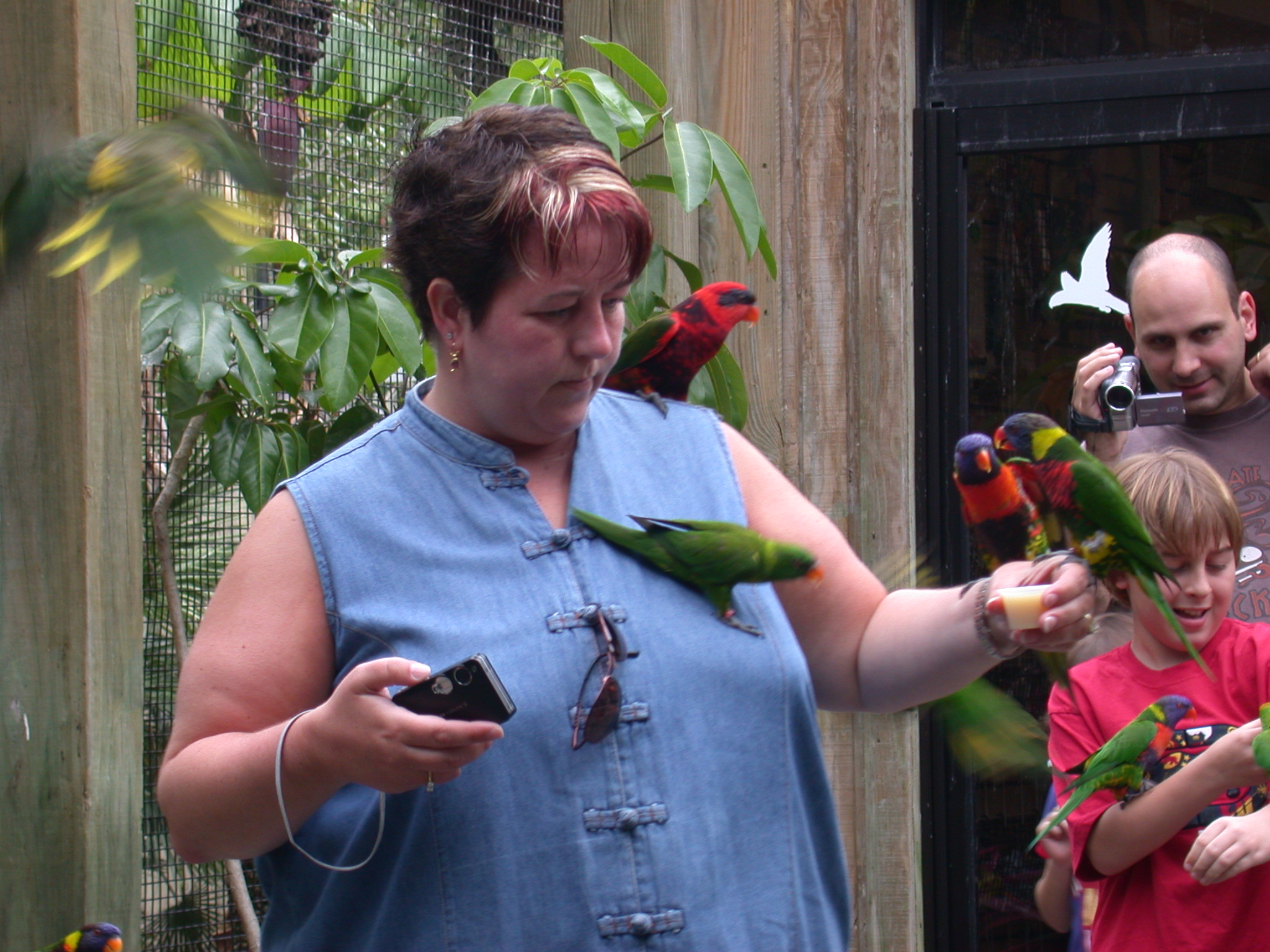
willing to try and interact with humans,
as shown in the picture below, usually if the human is willing
to give it food.
As
beautiful as they look, rainbow lorikeets still are not perfect.
Because of their specialized diet and short gut passage (which
leads to huge amounts of feces produced), rainbows tend to
easily receive bacterial and fungal infections in their digestive
tracts. As mentioned in the
Habitat and Geography page, rainbows are native to mainly
eastern Australia, but in the
state of
Click here to learn some more information about the rainbow lorikeets.